
A Decision That Starts With the Animal
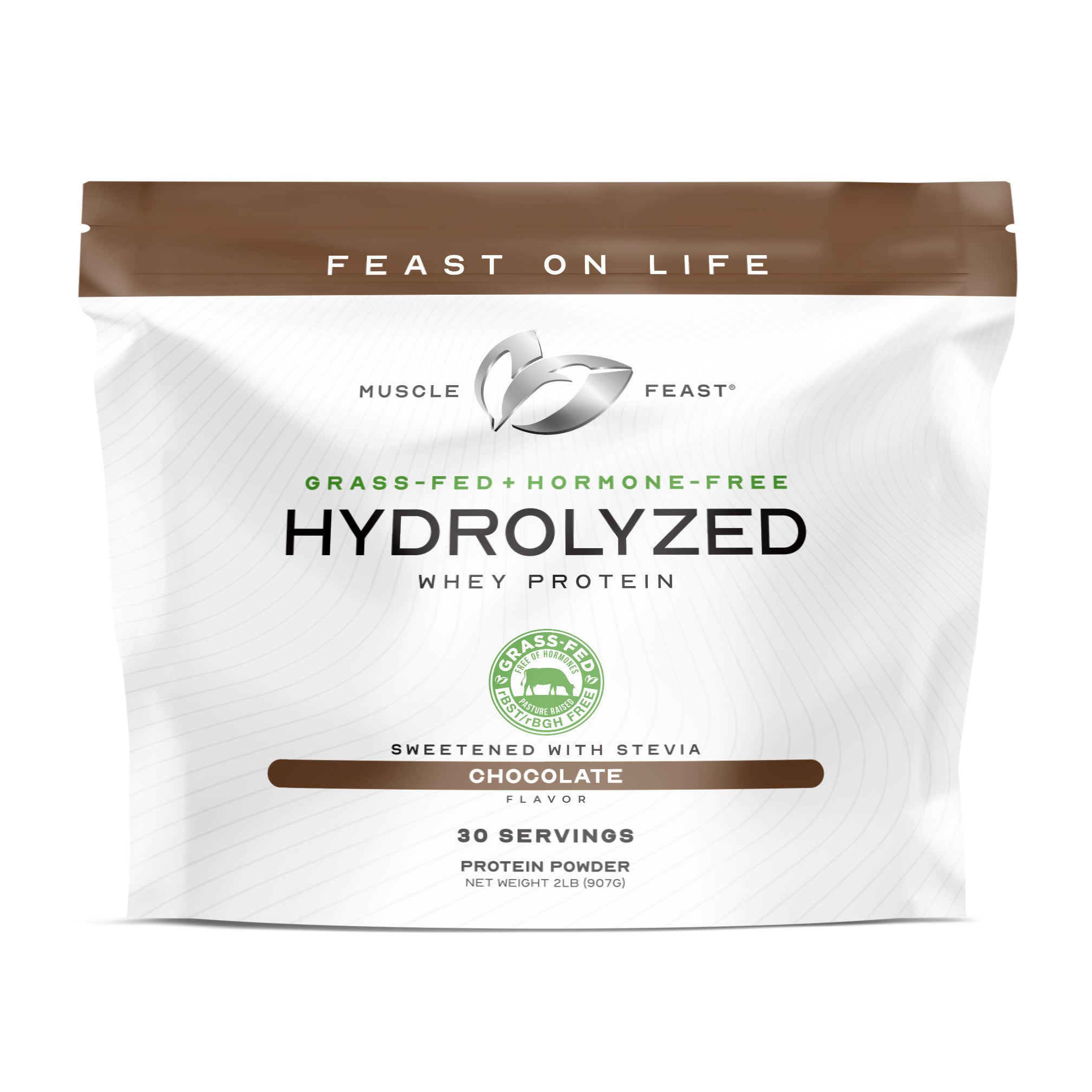
Muscle Feast believes animal welfare matters, and that dairy cows should have access to pasture. As a company, we believe purchasing decisions have real influence, which is why we make the effort to source whey from grass-fed systems where cows spend time on pasture.
This approach isn’t the easiest or the most convenient, but we believe supporting pasture access is worth the added work. When sourcing makes it possible, we choose it and we hope that doing so helps make pasture-based systems more common over time.
Why Source Comes First
Whey protein comes from milk, and milk starts with the cow. How that cow is fed, housed, and managed shapes the raw material from the very beginning. For us, sourcing is a decision made at the very beginning, not something you correct later.
That perspective guides how we think about ingredients before they ever become supplements. The conditions under which food is produced matter, even when the final product undergoes significant processing.
What Grass-Fed Means in Practice
In modern dairy production, different feeding systems are used to meet scale, efficiency, and supply demands. Grass-fed systems emphasize forage-based diets and pasture access, while other systems rely more heavily on confined feeding and grain-based rations. Each approach reflects different priorities in how milk is produced.
Grass-fed does not mean cows consume only grass year-round, have uninterrupted pasture access regardless of climate, or receive no supplemental feed. In practice, reputable suppliers define grass-fed as a forage-dominant diet, where grass, silage, hay, and forage crops make up the primary nutritional base, with supplementation used when necessary to support animal health and consistent milk production.
This is an operational definition, not an ideological one, and it reflects how pasture-based dairy systems function across seasons and regions. 
What Grass-Fed Does and Does Not Change
Grass-fed sourcing does not change the protein content of whey, nor does it alter its fundamental nutritional role. Whey protein remains a consistent, complete protein regardless of feed system.
Where grass-fed sourcing differs is at the level of how milk is produced, not how protein functions once isolated. Muscle Feast treats feed source as a sourcing consideration, not a performance claim.
Discover what makes Muscle Feast whey protein isolate different.
Why Source Still Matters for Whey Protein
Whey protein is produced as a downstream product of cheese-making, but it remains directly derived from milk. When a protein is consumed frequently and over long periods of time, upstream inputs still matter not because they create dramatic differences, but because small differences accumulate.
Choosing grass-fed whey is not about creating a superior supplement. It is about starting with a more disciplined raw material, produced under conditions that support animal welfare before processing ever begins.
Processing quality, filtration method, and testing ultimately determine the final product. Grass-fed does not replace those requirements it simply reflects how sourcing decisions are made at the beginning of the chain.
What This Choice Requires
Grass-fed whey is more difficult to source and maintain consistently. It involves tighter supply windows, higher costs, and fewer sourcing options.
Want to understand why protein prices are rising? Read more.
Even so, we believe it’s an important part of how we think about responsibility at the ingredient level. When grass-fed sourcing is available and verifiable, we will continue to pursue it not because it’s perfect, but because it aligns with how we believe food should be produced and with the standards we want to support over the long term.


Leave a Comment