
Boosting Your Daily Protein Intake: What the Average American Eats and Why One Scoop Can Make All the Difference
Protein is the unsung hero of nutrition. It builds and repairs muscle, keeps you feeling full, supports hormones and enzymes, and plays a key role in everything from immune function to bone strength. Yet most of us rarely stop to ask: How much protein am I actually getting each day? According to the most comprehensive national data available, the average American adult consumes far more than the basic minimum but still falls short of what many experts now consider optimal for long-term health, performance, and aging gracefully. The good news? Adding just one scoop of high-quality protein powder can close that gap instantly and deliver measurable benefits.
Let’s start with the numbers. Data from the U.S. Department of Agriculture’s What We Eat in America report (NHANES 2015–2016, the latest detailed breakdown of its kind) shows that adult males consume an average of 97 grams of protein per day, while females average 69 grams. That’s roughly one-third more protein for men, largely because they tend to eat more overall calories. Protein intake also drops significantly with age: younger adults (20–39) eat the most, while those 60 and older consume noticeably less, primarily because total calorie needs decline.
Importantly, these averages haven’t changed meaningfully in the past decade. The percentage of calories coming from protein has stayed steady at around 16%, and protein density (grams per 1,000 calories) is consistent across age and sex groups. In other words, the typical American diet already delivers more protein than the long-standing Recommended Dietary Allowance (RDA) of 0.8 g per kg of body weight about 56 g for an average man and 46 g for an average woman. But “adequate to prevent deficiency” is not the same as “optimal for thriving.”
Modern research shows that many adults especially those who train, want to maintain muscle as they age, or manage their weight benefit from 1.2–2.0 g of protein per kg of body weight daily. For a 180-pound (82 kg) man, that’s roughly 100–160 grams; for a 150-pound (68 kg) woman, 80–135 grams. The average intakes of 97 g (men) and 69 g (women) are solid starting points, but they leave room on the table literally for easy gains.
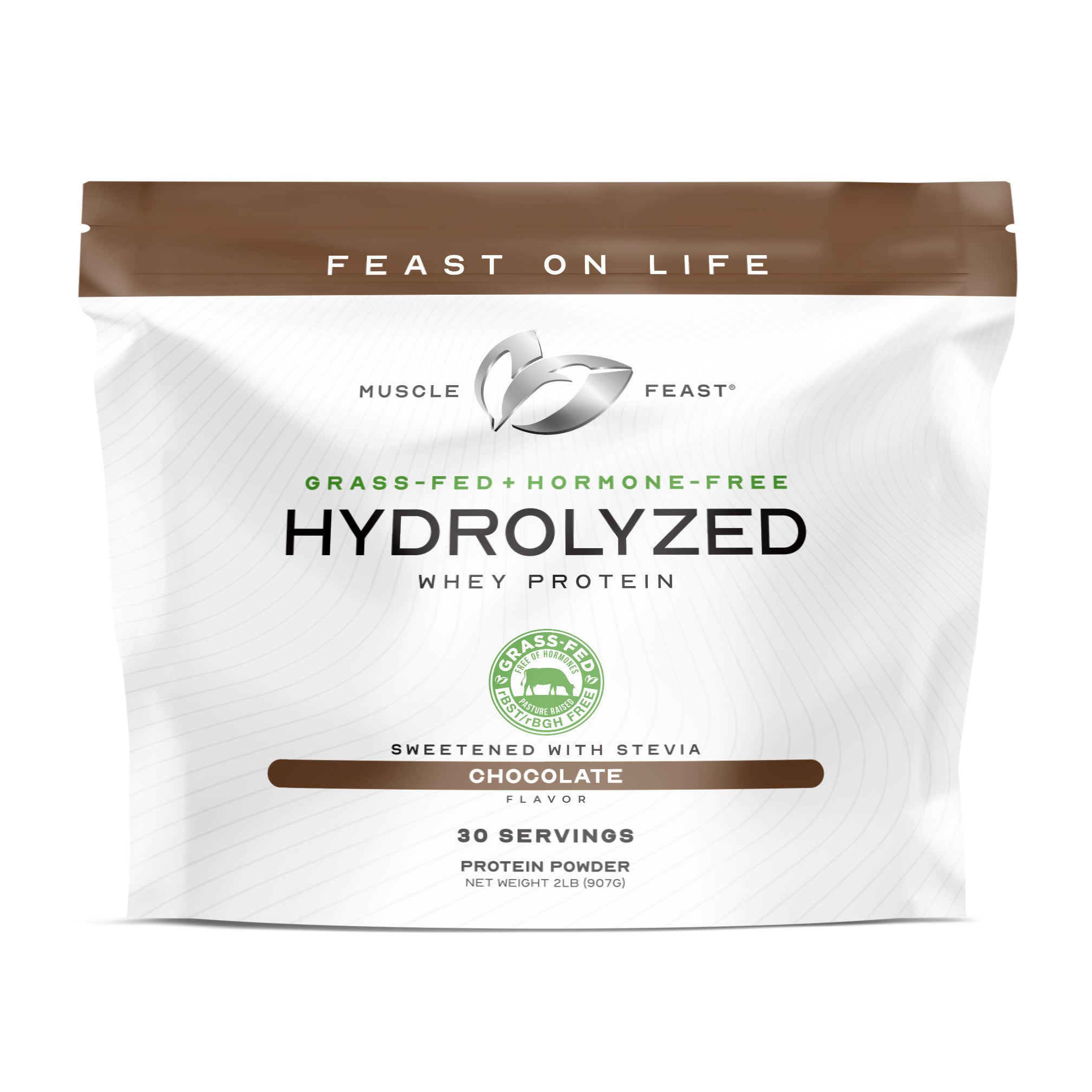
Here’s where a single scoop of protein powder changes the game. A standard 30-gram serving of Muscle Feast Grass-Fed Isolate delivers 25 grams of high-quality, complete protein with a full spectrum of essential amino acids, including the leucine that triggers muscle-protein synthesis. Add one scoop to a morning smoothie, post-workout shake, or even stirred into oatmeal or coffee, and the math becomes powerful:
-
Average male intake jumps from 97 g → 122 g
-
Average female intake jumps from 69 g → 94 g
That’s a 25–36% boost with virtually zero extra effort. For someone who weighs 70–80 kg and trains a few times a week, this single addition can push them from “meets basic needs” into the sweet spot associated with better muscle retention, faster recovery, and easier body-composition changes.
Why does this extra protein matter? Science keeps delivering clear answers.
1. Muscle growth, maintenance, and anti-aging
Protein provides the raw material for muscle repair. A 2022 meta-analysis of resistance-training studies found that consuming additional protein (on top of habitual intake) produced statistically significant gains in lean body mass and lower-body strength exactly what most people want as they get older. Sarcopenia (age-related muscle loss) accelerates after 50; higher protein intake, especially when paired with any form of resistance exercise, helps slow or even reverse it. One scoop post-workout or in the evening can make the difference between holding onto hard-earned muscle and watching it slowly slip away.
2. Satiety and weight management Protein is the most filling macronutrient
It increases levels of satiety hormones like GLP-1 and PYY while reducing ghrelin (the hunger hormone). Multiple reviews show that bumping protein intake by 25–30 g per day leads to spontaneous reductions in daily calories and better long-term weight control without the misery of constant hunger. If your goal is fat loss or simply not overeating in the evening, that extra scoop can be a game-changer.
3. Bone health and metabolic support
Contrary to outdated myths, higher protein intake does not leach calcium from bones; it actually supports bone density by stimulating IGF-1 and improving calcium absorption. It also helps stabilize blood-sugar levels when paired with carbs, supports a slightly elevated metabolic rate (protein has a higher thermic effect than carbs or fat), and may improve recovery from exercise-induced inflammation.
4. Convenience without compromise
Most Americans get the majority of their protein from animal sources at lunch and dinner. A scoop of Muscle Feast protein grass-fed, hormone-free, and free of unnecessary ingredients adds high-quality protein without extra saturated fat, sodium, or calories you don’t need. It’s an easy way to round out the day, especially for busy professionals, parents, or anyone who simply doesn’t want another chicken breast.
The bottom line is simple: the average American already eats a respectable amount of protein. But “respectable” isn’t the same as optimal. Adding one 30-gram scoop of Muscle Feast protein powder delivers an immediate, high-quality 25-gram upgrade that can help you hit performance, recovery, and body-composition goals without overhauling your entire diet.
Whether you’re 25 or 65, training hard or just trying to stay strong and lean for life, that single scoop is one of the highest-return nutrition investments you can make. Your muscles, your metabolism, and your future self will thank you.
- Conrad RN


Leave a Comment