
Stevia is a super sweetener that comes from the Stevia rebaudiana plant. It has been used for centuries as a natural way to sweeten foods and drinks, long before modern supplements existed. What we use today is a purified form of the naturally occurring sweet compounds from that plant, allowing for a consistent taste without adding unnecessary calories or ingredients.
Recently, stevia has started to get some pushback. You’ll see claims that it’s “overprocessed,” “bad for the gut,” or somehow worse than other sweeteners. Most of that criticism doesn’t really hold up when you step back and look at the full picture. Almost every ingredient in a protein powder goes through some level of processing, including whey protein itself. Whey isolate, for example, is filtered and refined to remove lactose and fat. That processing is the reason it works as well as it does. Stevia is no different, it’s simply extracting and standardizing the part of the plant that provides sweetness.
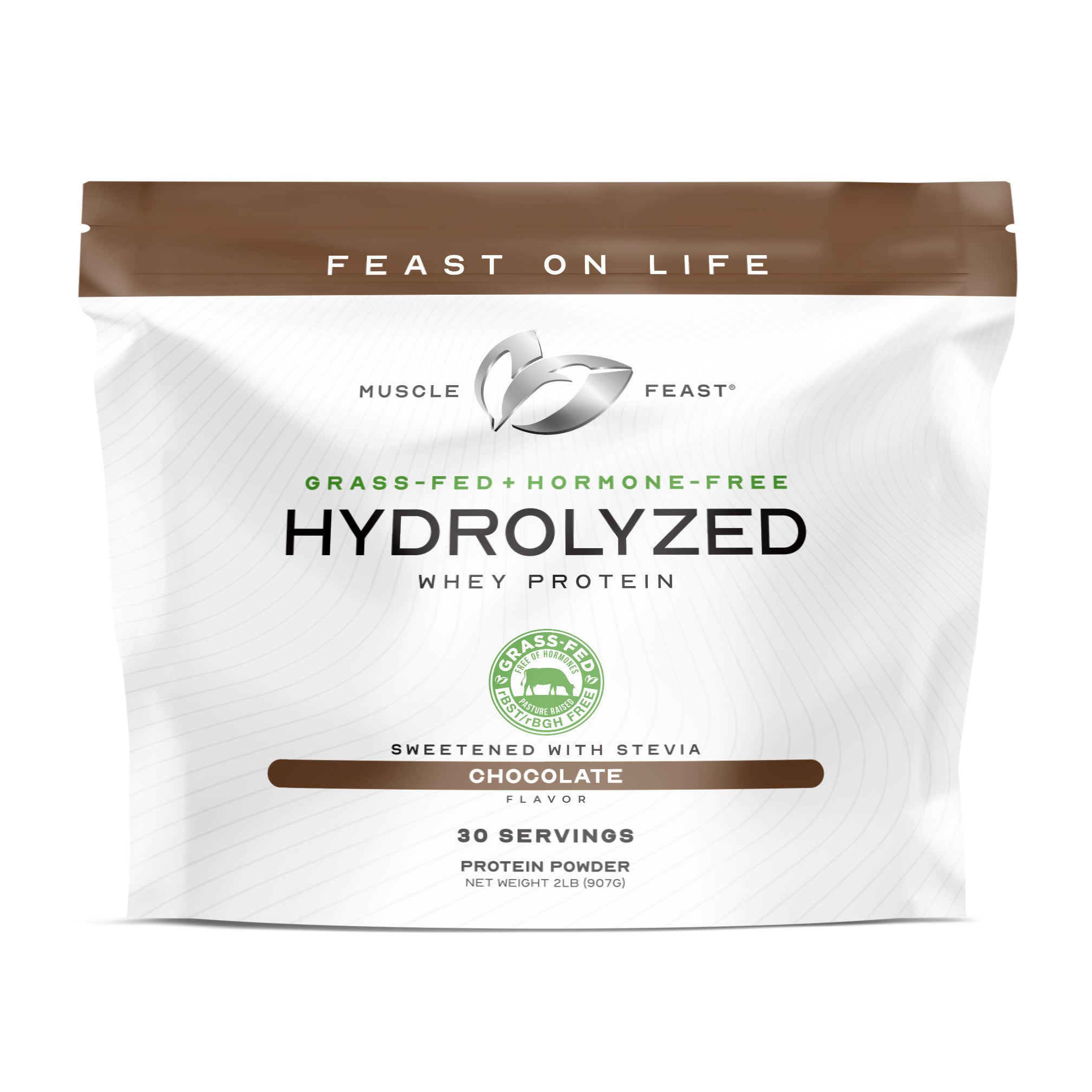
When formulating protein, every ingredient matters. If we used sugar, it would take several grams (often 5 grams or more per serving) to make the product taste good. That sugar doesn’t contribute to protein content. It simply takes up space in the scoop. Over the course of a bag, that means less actual whey protein and fewer grams of usable protein per serving. In practice, this would push serving sizes up to 35-40 grams just to deliver the same 25 grams of protein, while also reducing the total number of servings per container. It’s not a trade-off we think makes sense.
Another reason stevia works so well is its potency. Stevia is significantly sweeter than sugar, 200 to 300 times sweeter depending on the specific compound used. That’s why we can use it in milligram amounts instead of grams. Where sugar would require multiple grams per serving, stevia achieves the same level of sweetness with a fraction of that, allowing us to keep the focus on protein.
Taste is also part of the conversation. Stevia has a reputation for being bitter or having an aftertaste, and that can be true if it’s used poorly. But that comes down to formulation. When done correctly, the result is a clean, mild sweetness that doesn’t overpower the product. Our goal isn’t to create something that tastes like dessert, it’s to make something you can use consistently because it tastes good.
You might also wonder why we don’t use artificial sweeteners. Ingredients like Sucralose or Aspartame are widely used and effective. For us, the decision comes down to simplicity and keeping the product more natural. We aim to keep our formulas as minimal and straightforward as possible, and stevia aligns better with that approach.
At the end of the day, our goal is simple: deliver as much high-quality protein as possible without unnecessary additions. Using sugar would mean larger scoops, fewer servings, and less actual whey per serving. Stevia allows us to avoid that trade-off and keep the product focused on what matters.
- Conrad RN


Leave a Comment